Calibrate Markov Models with Clinical Data
Align Model-Generated Survival with Clinical Evidence
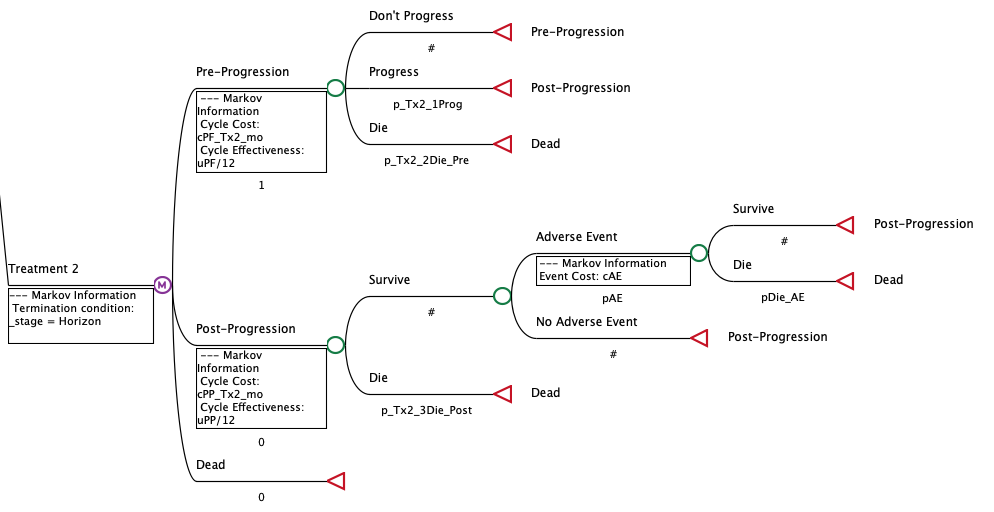
Use clinical survival data such as Progression-Free Survival (PFS) and Overall Survival (OS) to refine the individual event risks that drive disease progression in your Markov model.
Clinical evidence may describe overall survival outcomes, while a Markov model requires individual event risks to determine how patients move among health states. Those individual event risks cannot always be derived directly from the available survival data.
TreeAge Pro calibration tools let you use observed clinical survival data as calibration targets and refine model inputs so that model-generated survival aligns with the clinical evidence.
Use Clinical Survival Data as Calibration Targets
Compare Model-Generated Survival with Observed Clinical Evidence
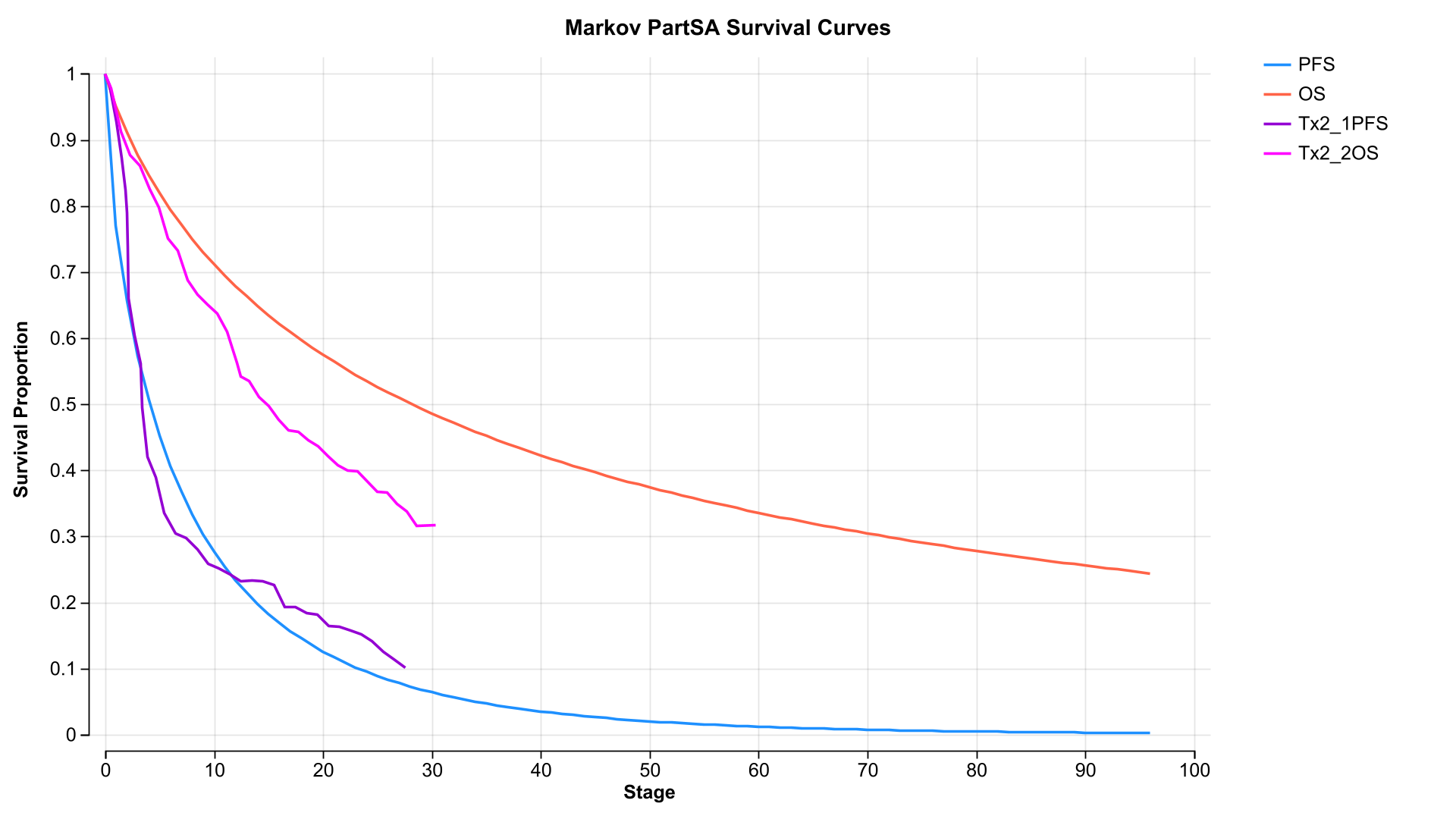
Use clinical survival data such as PFS and OS as targets for the survival outcomes generated by your Markov model.
Connect Survival Outcomes to Markov State Membership
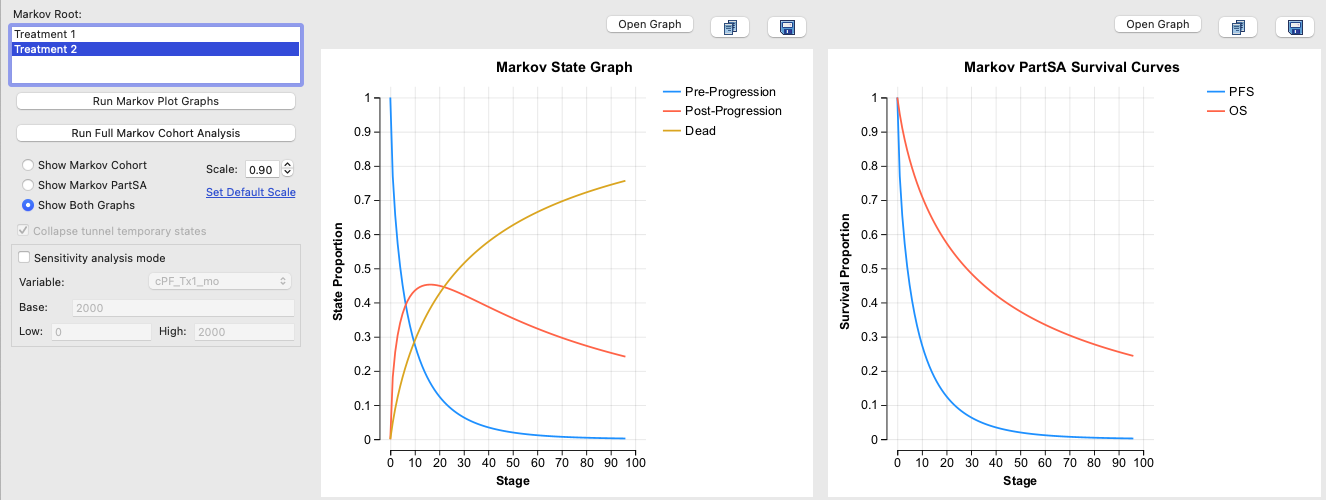
Markov cohort analysis generates health-state membership over time. These results can be used to derive survival outcomes such as PFS and OS and compare them with the observed clinical data.
See How Well the Model Represents the Evidence
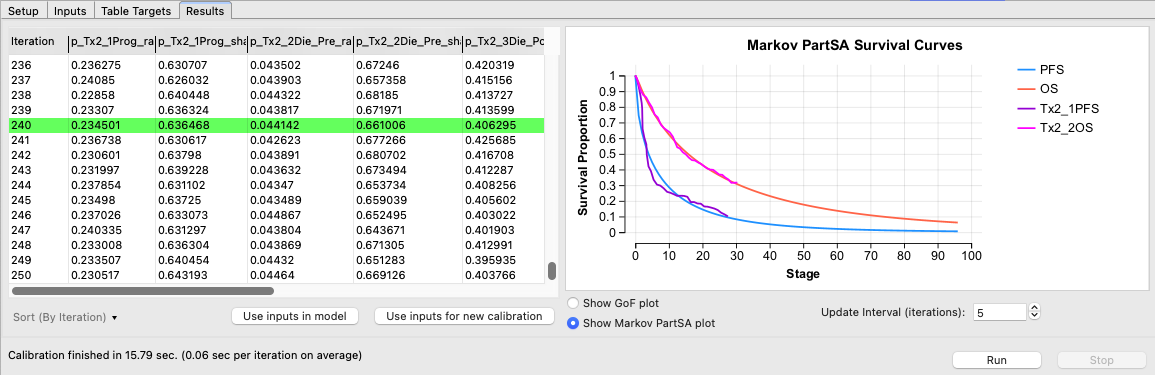
Overlay model-generated survival curves with the clinical survival data to compare model behavior with the observed evidence before and after calibration.
Refine Event Risks to Align Model Behavior with the Evidence
Select the Model Inputs to Calibrate
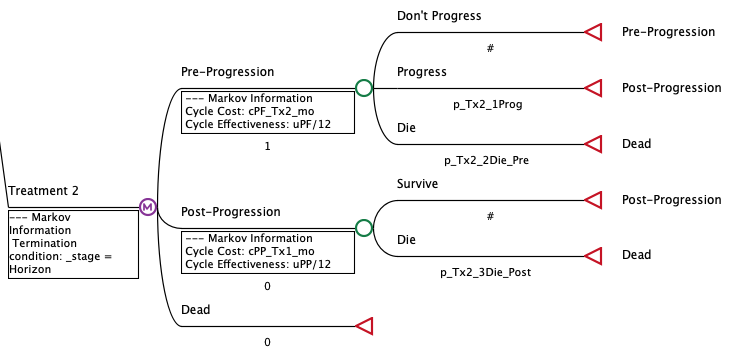
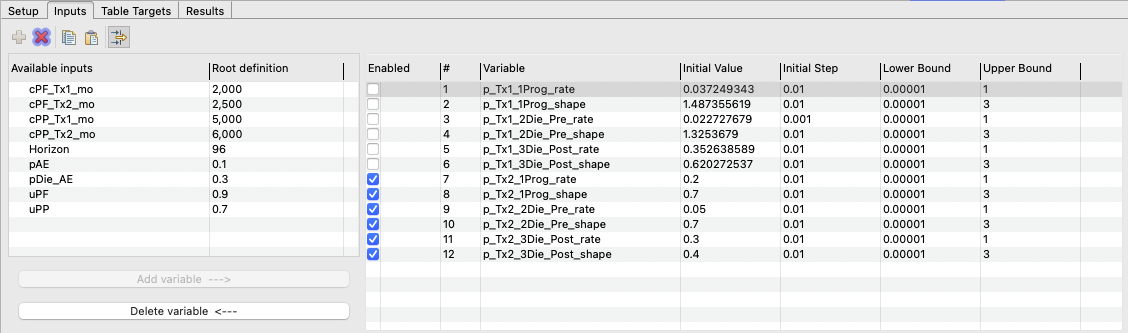
Choose the event-risk inputs that should be refined during calibration, such as parameters defining progression or mortality risks.
Define the Calibration Targets
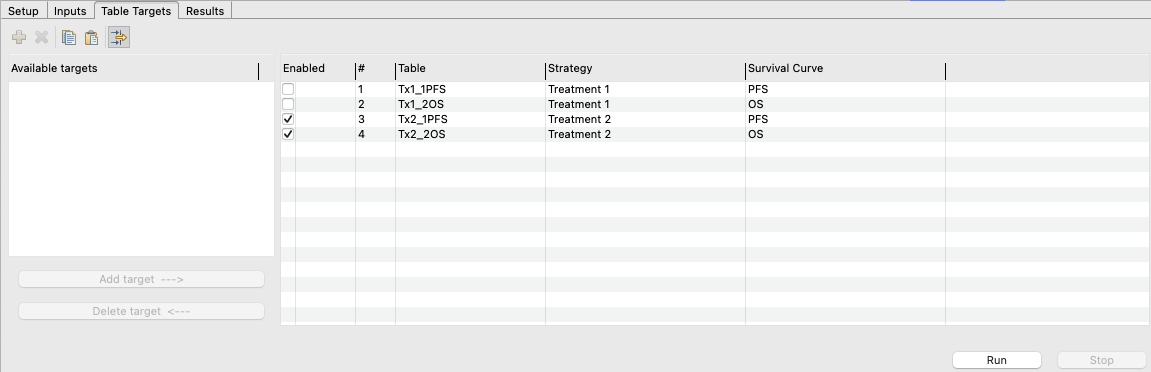
Associate observed survival data with the corresponding model-generated outcomes so the calibration can evaluate the fit between model behavior and the clinical evidence.
Run Calibration and Refine the Model Inputs
TreeAge Pro iteratively evaluates alternative input values to improve the fit between model-generated survival and the clinical calibration targets. Use the resulting calibrated inputs in the model and review the resulting survival curves against the observed evidence.
Add Clinical Detail While Remaining Anchored to the Evidence
Represent Clinically Important Events
Add events such as adverse events, recovery or recurrence, screening, hospitalization, or other events that need to be represented explicitly in the Markov model. These events may affect patient pathways, costs, outcomes, and survival.
Recalibrate as the Model Evolves
Recalibrate selected event-risk inputs after adding model complexity while keeping appropriate inputs fixed. This allows the more detailed model to remain aligned with the same observed clinical survival evidence.