Model the Full Impact of Screening
Screening can change when disease is detected, when treatment begins, and what happens next.
The modeling challenge is connecting all of those effects.
A screening model may need to represent when screening occurs, how well the test identifies disease, what happens after diagnosis, how treatment changes subsequent progression, and how those changes affect long-term costs and health outcomes. TreeAge Pro lets you bring those elements together in one visual health economic model.
Connect screening to disease progression
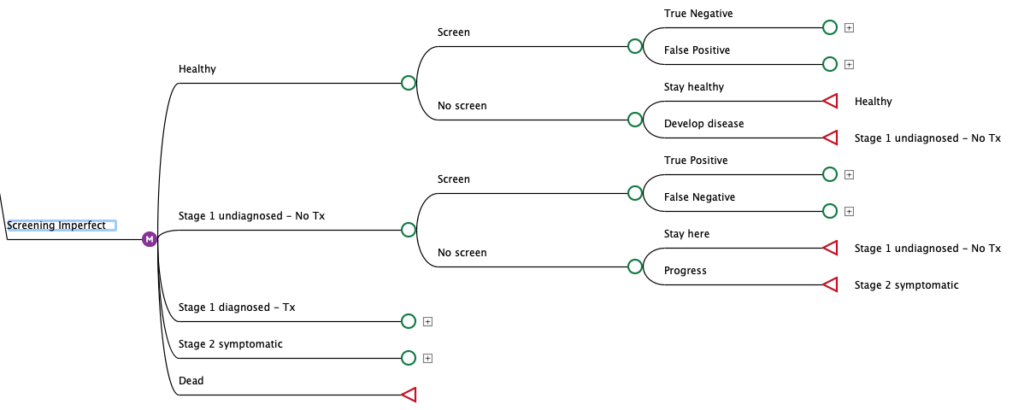
In TreeAge Pro, you can model screening at defined intervals while disease progression continues over time.
When disease is detected, the model can reflect the resulting diagnosis and treatment.
This allows you to connect when disease is detected with how earlier detection slows disease progression.
Does screening deliver value?
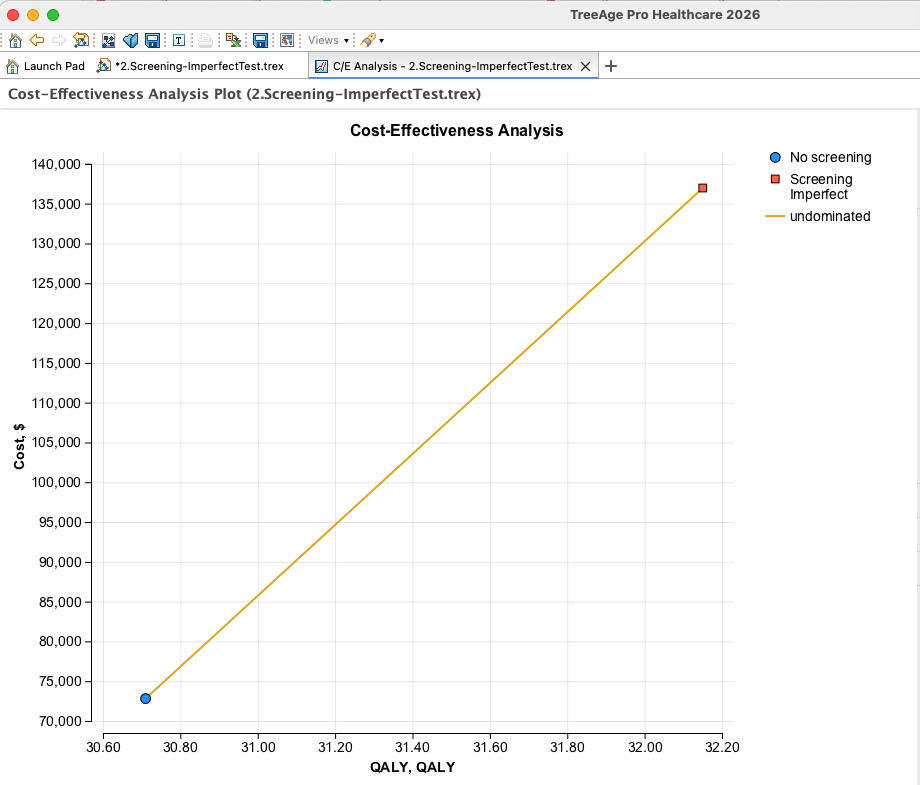
The value of screening depends on the disease, the population being screened, the screening strategy and what happens following detection.
Factors such as disease prevalence and incidence, screening costs, test sensitivity and specificity, and the long-term benefits of earlier treatment can all influence the result.
TreeAge Pro lets you incorporate test sensitivity and specificity into the model, so the pathways reflect true and false screening results and their subsequent consequences. This allows you to evaluate the impact of screening based on how the test performs, rather than assuming perfect detection.
Understand what drives the value of screening
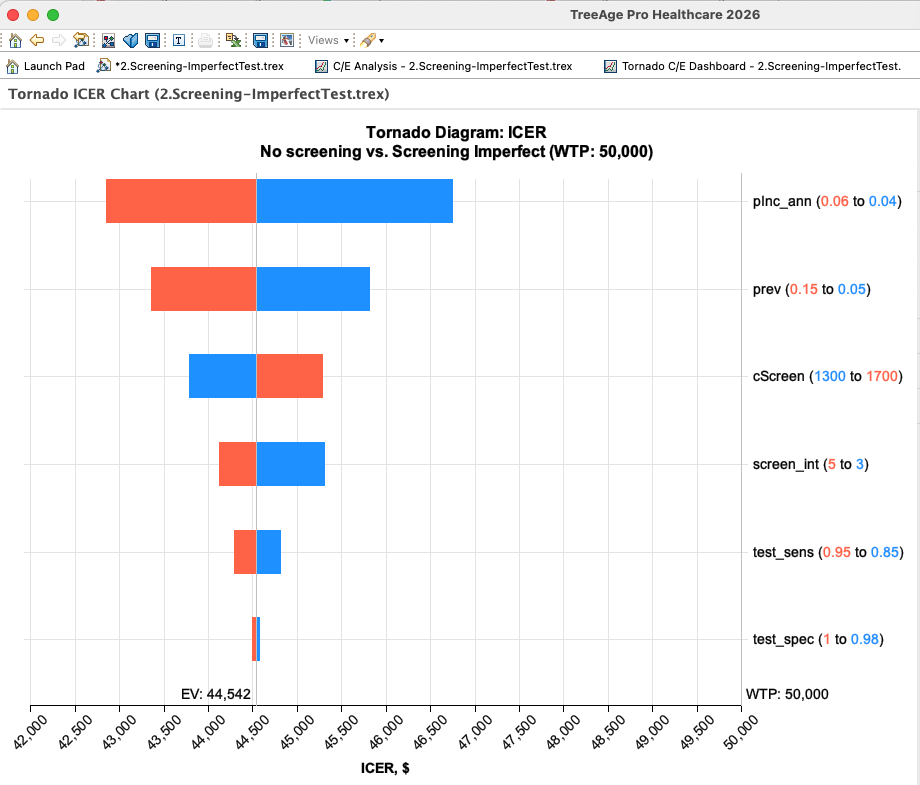
The value of a screening strategy can depend on factors such as disease prevalence and incidence, screening cost and frequency, and test sensitivity and specificity.
Using sensitivity analysis in TreeAge Pro, you can explore how changes in these inputs affect the cost-effectiveness results and identify which factors have the greatest influence on the value of screening.