
Hazard Models
Model continuously changing risks within explicit patient pathways.
Hazard Models combine a state-transition structure with continuous-time hazards, allowing event risks to change continuously over time.
A New Approach: Hazard Models
Healthcare models commonly represent disease progression using Markov or Partitioned Survival approaches.
Markov Models represent transitions between health states using probabilities applied over discrete cycles. Their explicit state-transition structure makes it possible to represent clinically meaningful events and pathways.
Partitioned Survival Models use continuous survival functions to determine health-state membership over time. This provides a direct way to use fitted survival data to drive disease progression, but without explicit transitions between states.
Hazard Models bring these concepts together. They retain an explicit state-transition structure while using continuous-time hazards to represent event risks.
Apply distinct event risks directly using hazard functions while retaining the flexibility of an explicit patient pathway. Use hazards from fitted survival distributions, tabular survival data, or other hazard functions.
See Hazard Models in Action
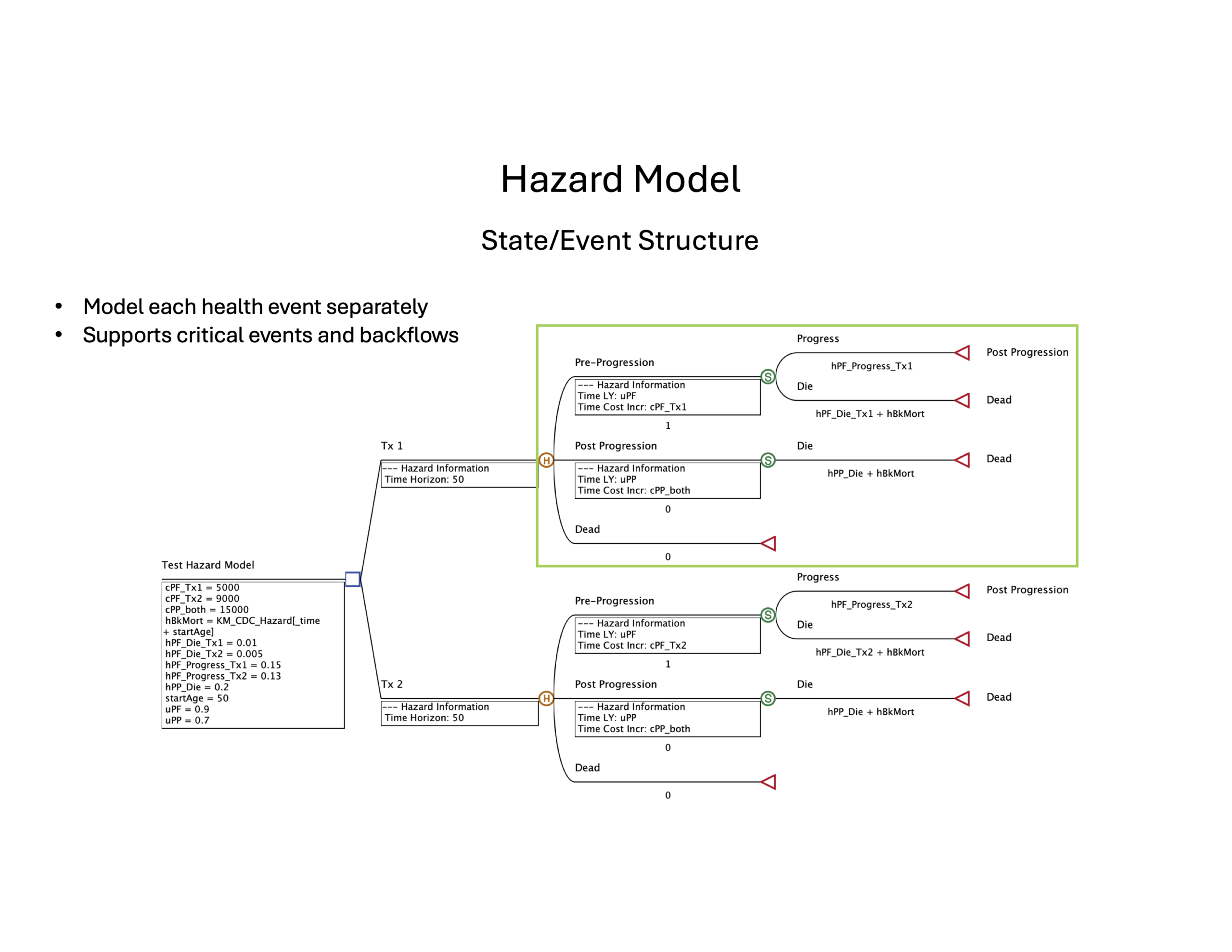
Build Explicit Patient Pathways
Represent health states and clinically meaningful events directly in the model structure, including critical events and backflows.
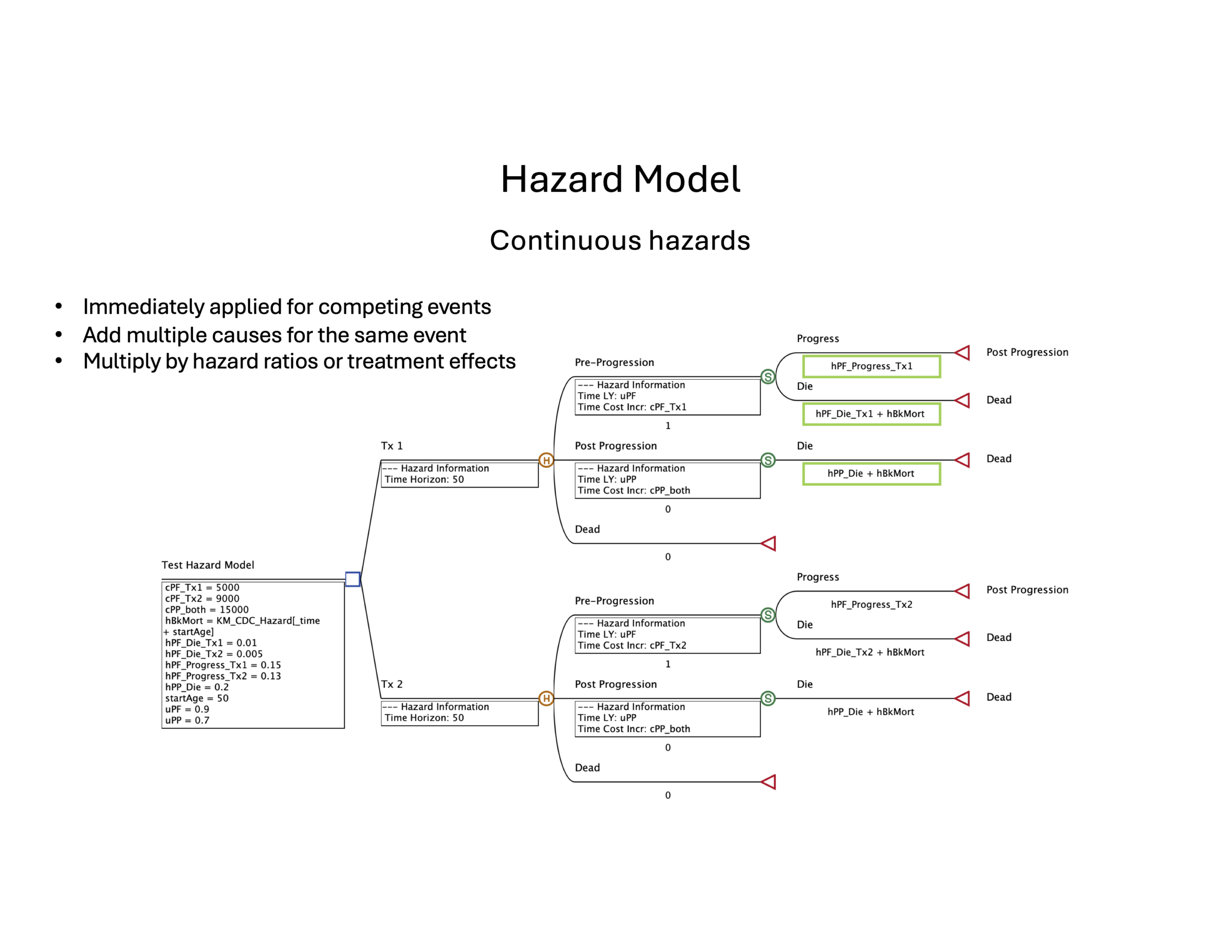
Apply Continuous and Competing Event Risks
Assign continuous-time hazards directly to events. Model competing event risks as they operate continuously over time, combine multiple causes of the same event, and incorporate treatment effects through hazard ratios.
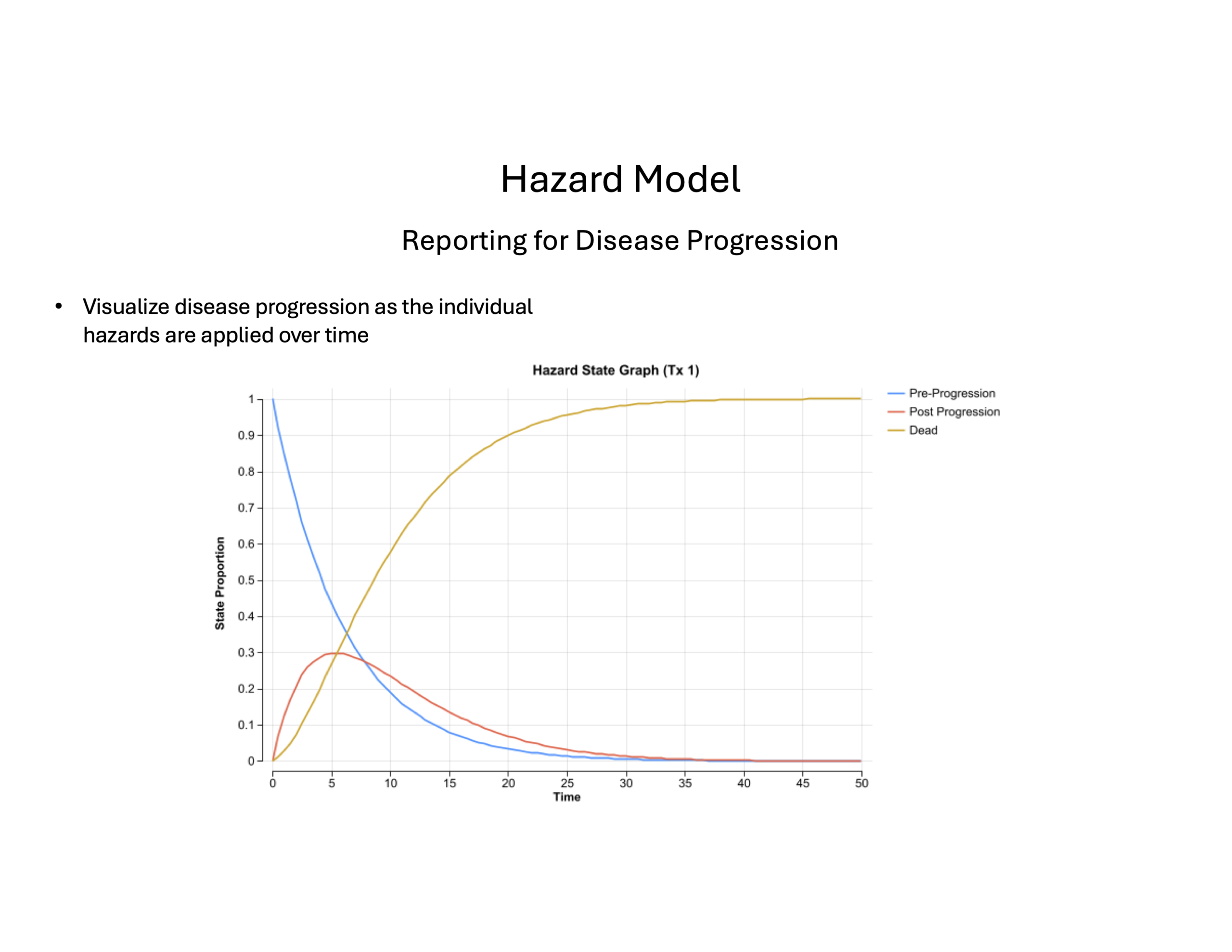
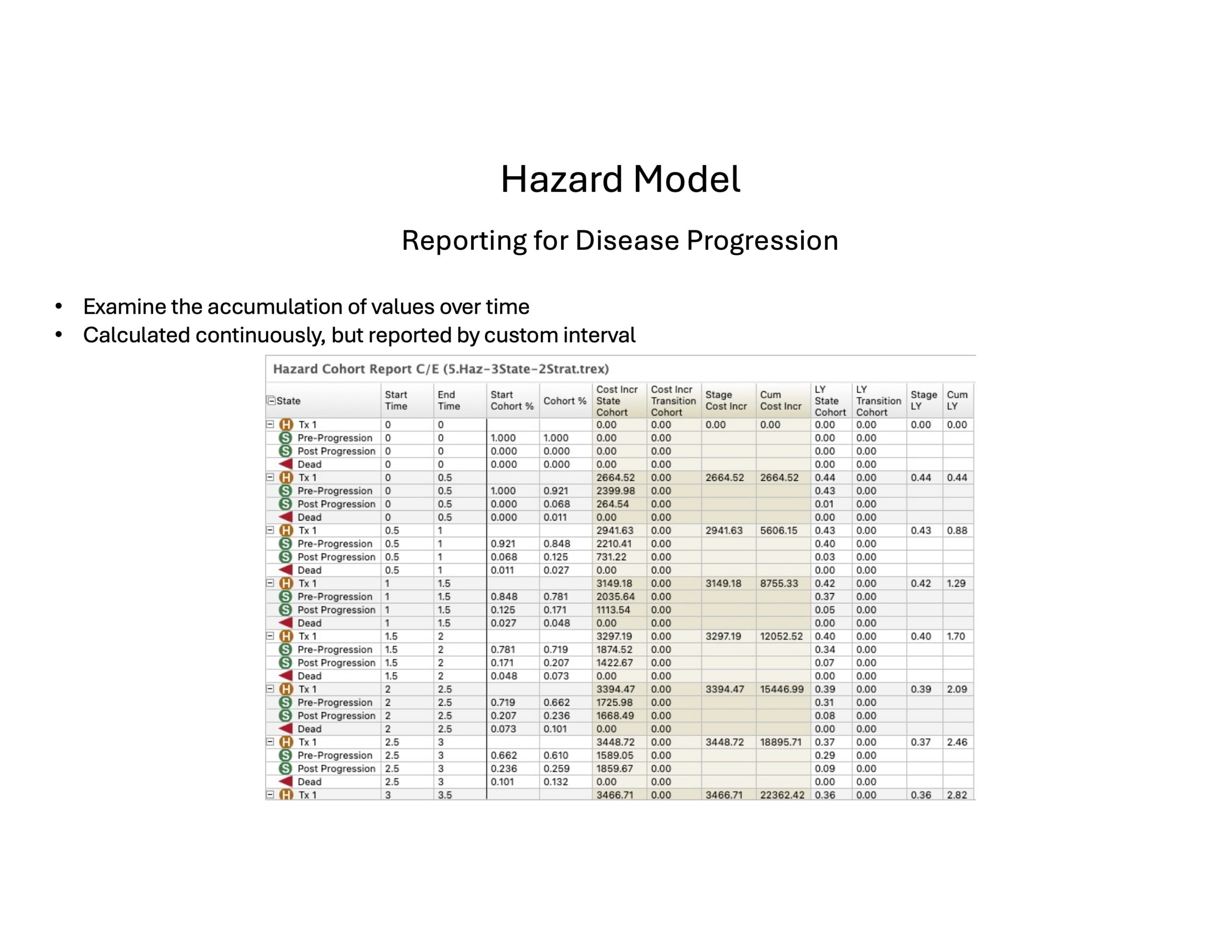
Visualize Disease Progression and Outcomes Over Time
See how continuously applied event risks affect disease progression while accumulating costs, effectiveness, and other model outcomes over time. View and report results at custom time intervals for detailed analysis.
Analyze Strategies with TreeAge Pro
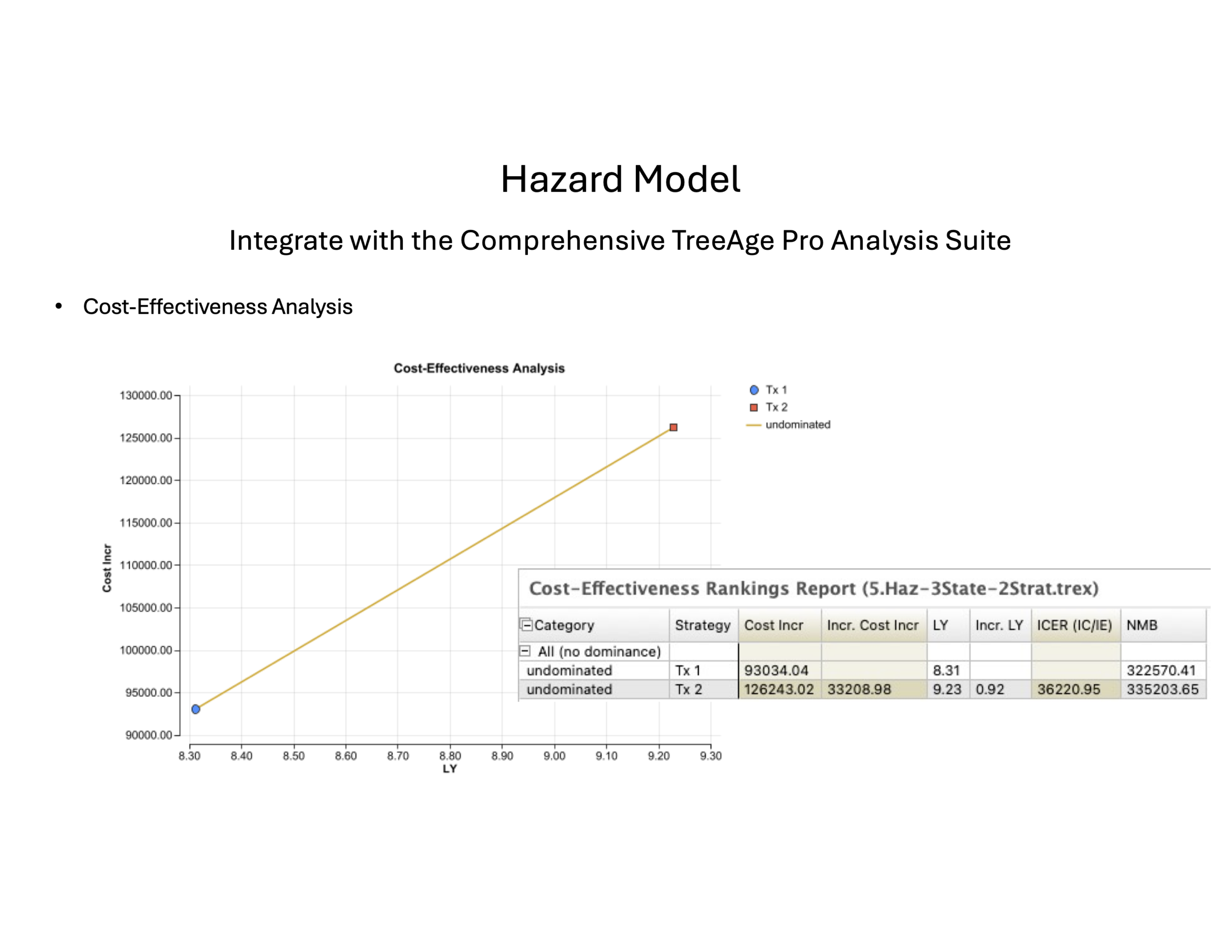
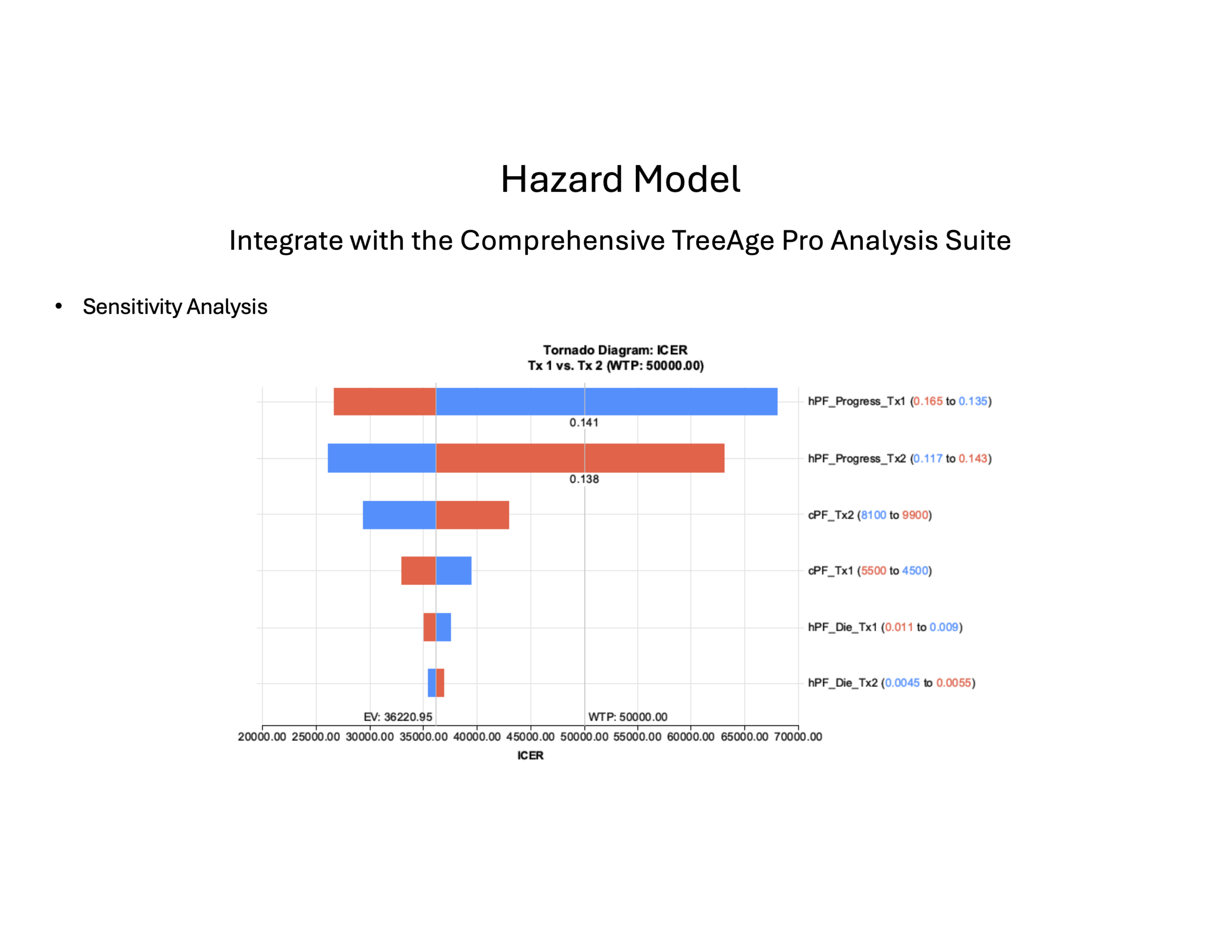
Use Hazard Models with familiar TreeAge Pro analyses, including cost-effectiveness analysis and sensitivity analysis.
Model Events Continuously on Their Natural Timescale
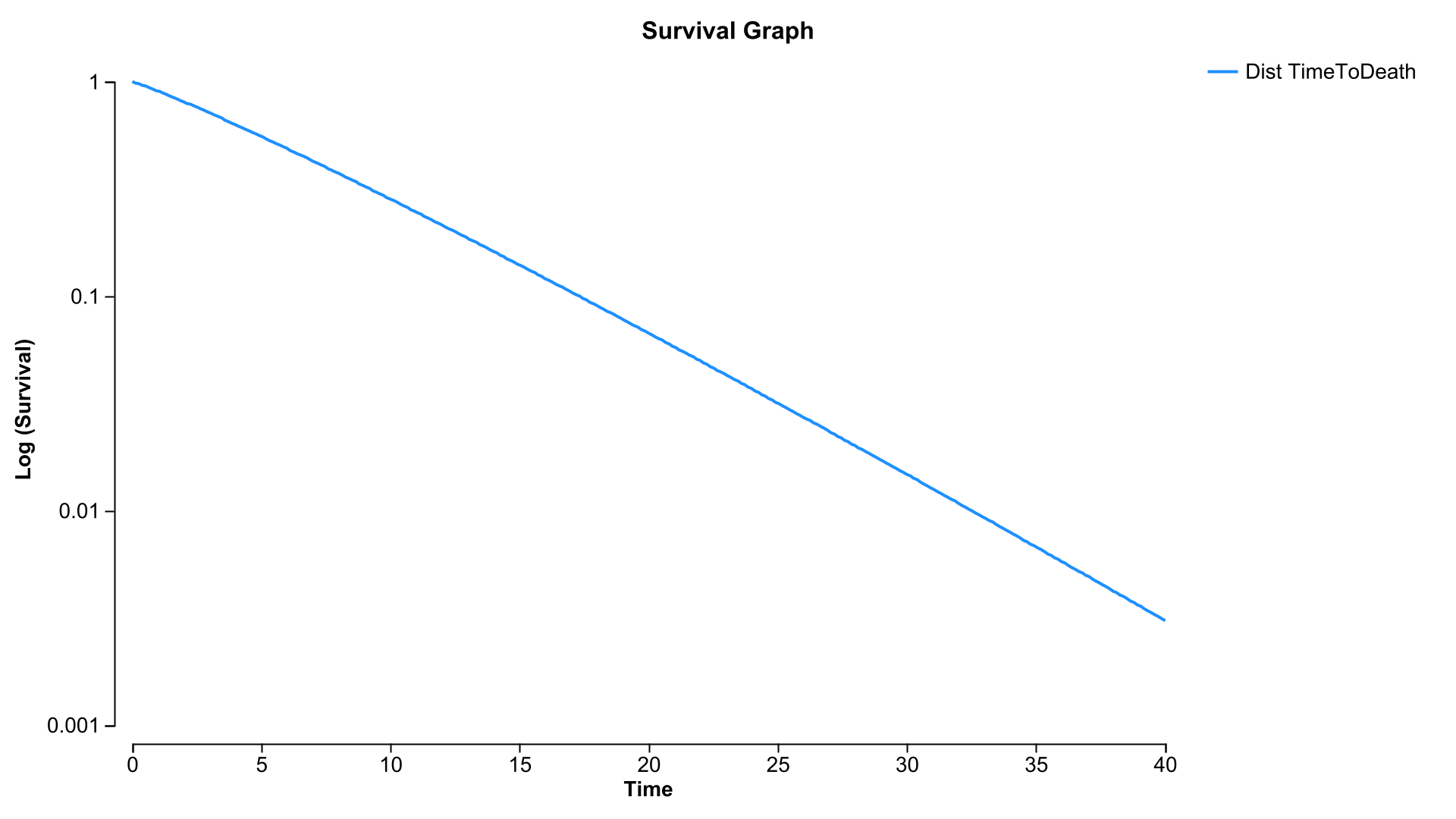
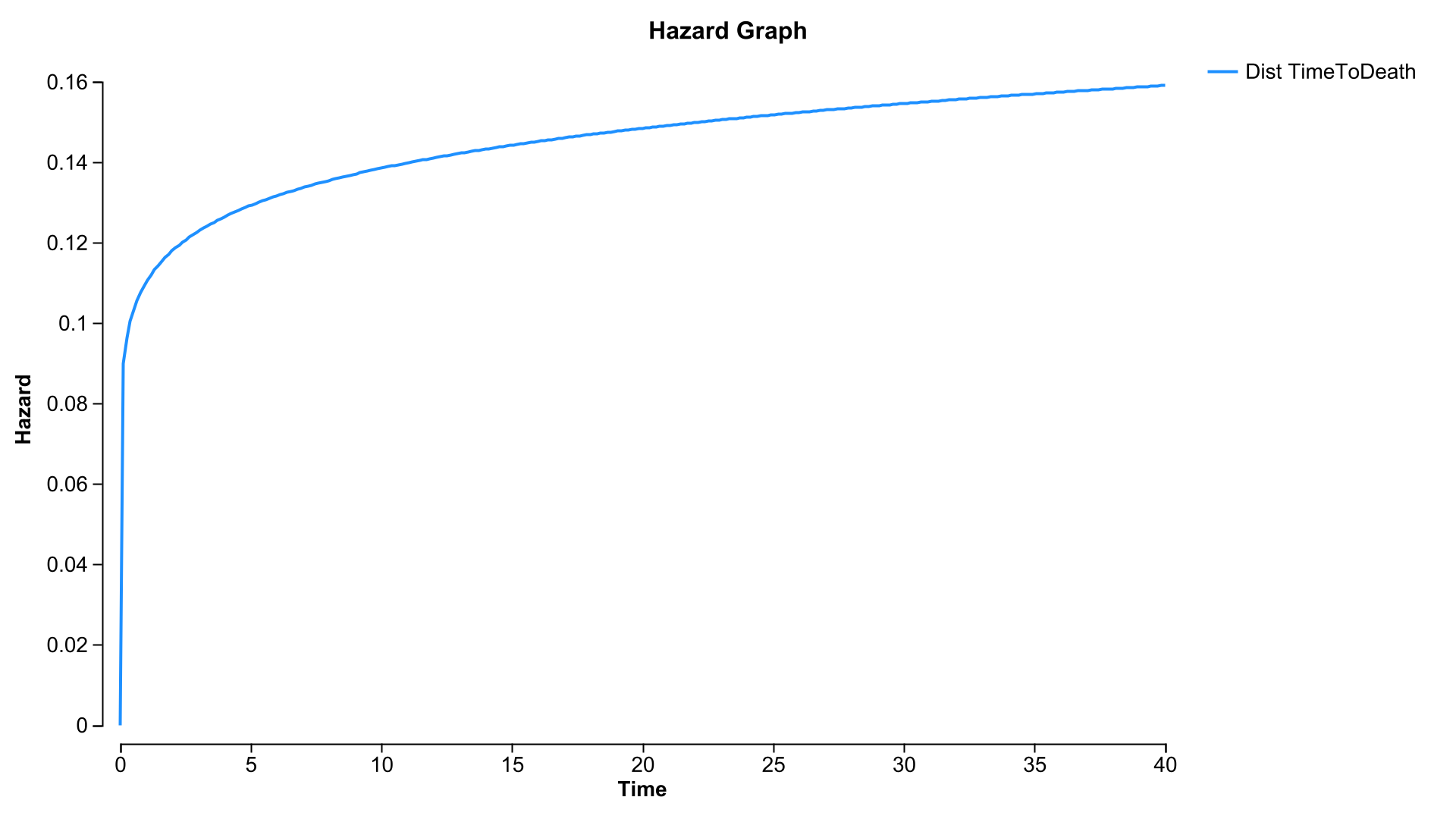
Clinical events don’t always occur on the same timescale. Important events may occur rapidly early in a model, followed by much slower disease progression over the long term.
Traditional Markov models use a fixed cycle length, requiring a time interval that can adequately represent both rapidly occurring events and slower long-term progression. Hazard Models remove this constraint by applying event risks continuously over time.
Risk can change continuously over time as well. Use changing hazard functions directly, without first converting them into probabilities applied over discrete model cycles.
From Hazard Modeling to Decision Analysis
Hazard Models integrate with the TreeAge Pro analysis tools you already use to evaluate healthcare strategies.
Accumulate costs and health outcomes as patients progress through the model, compare strategies using cost-effectiveness analysis, and explore uncertainty with sensitivity analysis.
Build the model, visualize disease progression, and analyze the results—all within the same TreeAge Pro modeling environment.